From BIM to Installation: How 5S Keeps Southland’s Sheet Metal Work Moving
Written by Charlie Hall, Regional Sheet Metal Superintendent at Southland Industries
At Southland, 5S plays an important role in organizing work from design through fabrication and installation.
Large projects, such as hospitals, involve multiple systems, different material types, and thousands of parts spread across several floors and areas. Without a structured process, it can be difficult to keep production organized and ensure material is ready when the field needs it.
Organizing Work During Preconstruction
The 5S process begins during preconstruction. Once a project is designed, modeled in BIM, and coordinated with other trades, the work is broken into manageable sections by floor, system, and area.
The general foreman then marks up the drawings and sends them to detailing, where the parts are further organized by fabrication type, including:
- Round fittings
- Square fittings
- Spiral duct
- Coil line work
This allows the shop to send files directly to the appropriate machines and helps keep fabrication moving efficiently.
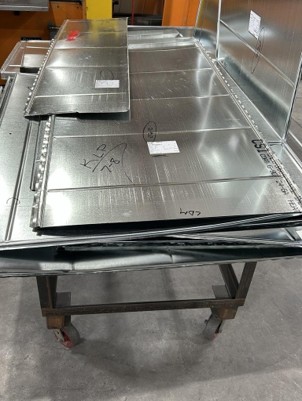
At Southland, we move each job through our fabrication shop on rolling tables identified with color-coded labels. These labels include all of the job and fabrication information needed throughout the process. Once fabrication is complete, the materials are loaded onto a cart, organized by job and area, and staged for delivery.
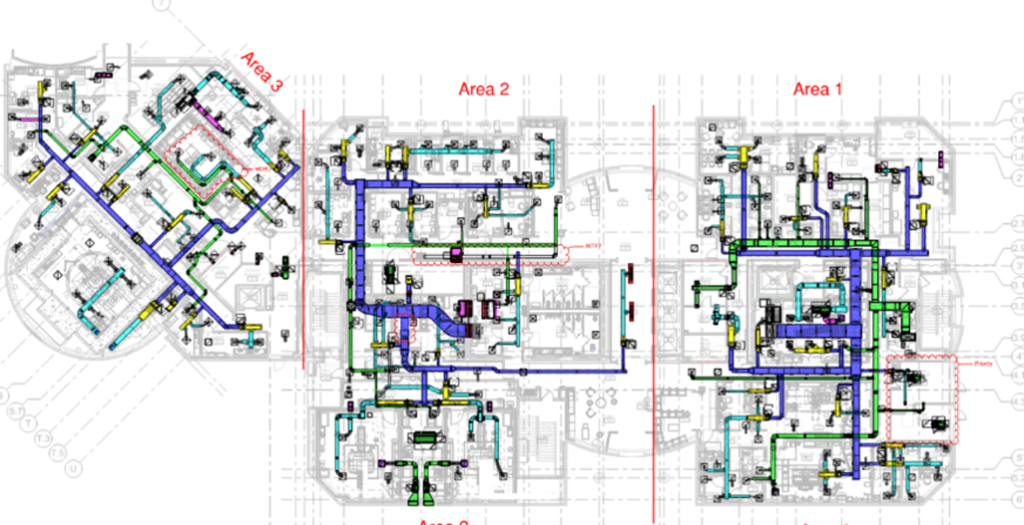
Project area breakdown used during preconstruction to organize fabrication and installation workflow.
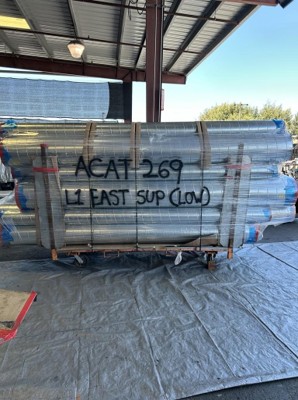
Above is a section drawing created by our General Foreman. The drawing breaks the project into field installation areas and illustrates how each section will be built. The Foreman also identifies which duct sections should be spooled together, marking them with identifying numbers so the fabrication shop can assemble, label, and ship them to the jobsite in the correct sequence for installation.
From Fabrication to Installation
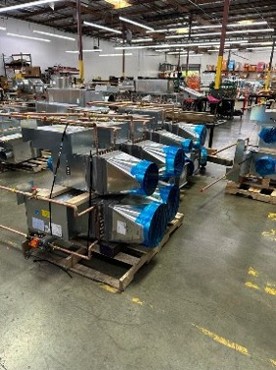
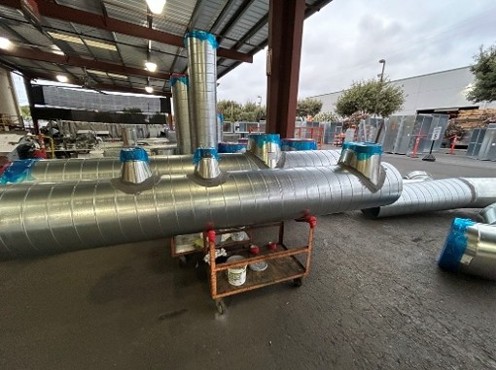
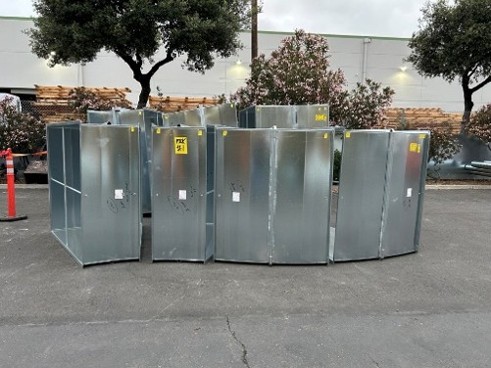
In the shop, parts are processed through the laser, spiral machine, or coil line. They are then formed and assembled before being moved outside for spooling.
Spooling groups parts together by area, system, or installation sequence, making them easier to identify, deliver, and install in the field. This reduces search time, improves material handling, and supports faster installation.
How 5S Supports Efficiency
In our Bay Area division, we fabricate between 4 million and 5 million pounds of duct each year, making efficiency essential.
5S supports this workflow by helping us:
- Sort materials
- Set materials in order
- Maintain clean shops and jobsites
- Standardize processes across projects
- Sustain expectations across teams
At Southland, 5S is more than housekeeping. It is a practical system that reduces waste, improves organization, and supports efficient fabrication, delivery, and installation.
Key Takeaways
- 5S helps organize work from design through installation.
- Breaking projects into manageable areas improves fabrication and field readiness.
- Spooling reduces search time and improves installation efficiency.
- Standardized organization supports consistent performance across projects.
- 5S reduces waste while improving fabrication, delivery, and installation workflows.